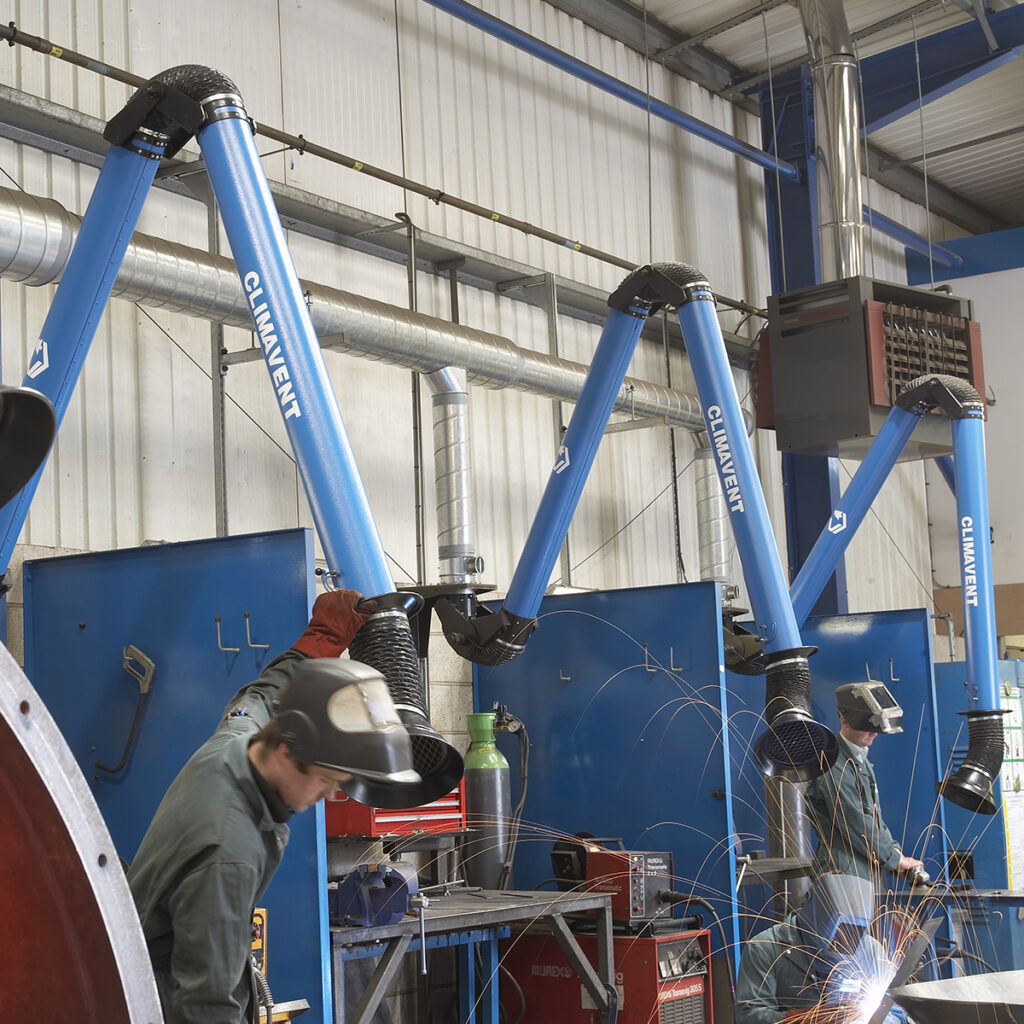
 Welding remains a core activity across construction, manufacturing and engineering – but it carries a risk that must not be underestimated.
Exposure to all welding fume, including mild steel welding fume, can cause lung cancer. This applies to routine fabrication, maintenance work and site-based welding just as much as heavy industrial operations. Without effective controls, exposure can build over time, increasing long-term health risks for workers.
The Health and Safety Executive (HSE) has recently released a video highlighting how employers can control exposure using on-torch Local Exhaust Ventilation (LEV) – reinforcing the importance of capturing welding fume at source.
At PRR Safety, we fully support this guidance and are encouraging businesses to review whether their current control measures are genuinely effective.
Welding fume is made up of fine airborne particles and gases generated during the welding process. These particles are small enough to be inhaled deep into the lungs.
Because the health effects develop over time, it can be easy for organisations to become complacent – particularly where welding has “always been done this way.”
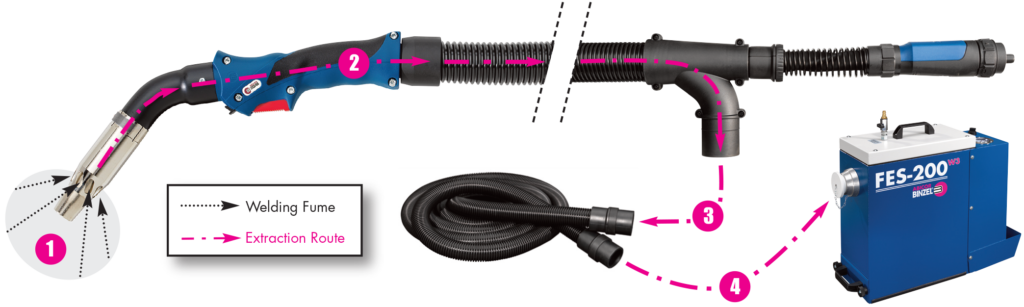
On-torch extraction systems are designed to remove fume directly from the welding arc as it is generated, preventing it from entering the welder’s breathing zone.
When properly selected, used and maintained, they can:
- Significantly reduce personal exposure
- Limit the spread of fume across the workshop
- Improve overall air quality
- Support compliance with UK health and safety legislation
However, installation alone is not enough. Performance depends on correct positioning, airflow, maintenance and consistent use.
 What the HSE Video Covers
The HSE video provides practical, accessible guidance for employers, supervisors and welding operatives. It focuses on real-world application rather than theory.
- Basic operational principles – understanding how on-torch extraction works
- Good welding practices – techniques that improve fume capture
- Common issues and solutions – identifying and resolving typical performance problems
- Training and workplace culture – ensuring systems are used correctly and consistently
Employers have a legal duty to adequately control exposure to hazardous substances, including welding fume.
But this is about more than compliance.
Occupational lung cancer linked to welding fume exposure is preventable when appropriate controls are implemented, maintained and supported by proper training.
We encourage all employers and welding teams to watch the latest video released by the Health and Safety Executive and review their current control measures.
If you would like independent advice on welding risk assessments, LEV testing or improving your exposure controls, PRR Safety is here to support you.
View the video here: